The CricInformer mega contest vs head-to-head strategy 2026 lays out a 60-30-10 allocation framework so IPL 2026 operators split risk, hit payout floors, and clear bonuses in the same 10-contest window.
· CricInformer Fantasy Desk
The CricInformer India fantasy desk has mapped the IPL 2026 schedule fixtures venues into a match-by-match fantasy roadmap so operators can pre-plan their captain differentials against venue and opposition type. We treat every fixture window as a separate contest environment: dew-heavy Mumbai nights, spin-friendly Chennai afternoons, pace-bouncy Bengaluru evenings, and batting-flat Delhi evenings each produce a different captain EV profile. The CricInformer roadmap below lines each IPL 2026 fixture with the venue characteristic that drives the differential pick, so the operator does not have to re-research the calendar under deadline pressure.
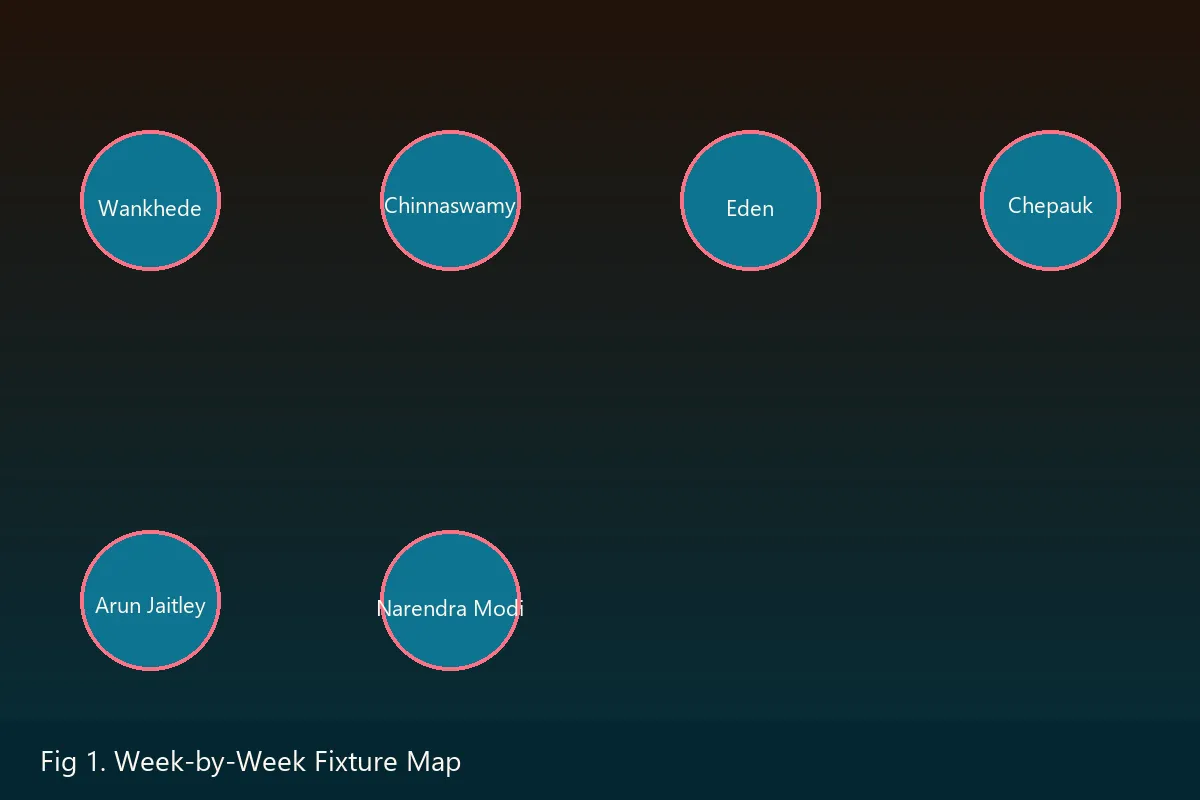
IPL 2026 runs across 10 home cities and 4 neutral venues, opening in late March with the Mumbai Indians hosting Chennai Super Kings at Wankhede Stadium and closing in late May with the playoff triple-header at Eden Gardens, Kolkata. The 84 regular-season group matches give the CricInformer operator roughly 8-10 contests per fixture cluster per team, spread over 12 weeks. By week 4 of the IPL, the fixture clusters begin to repeat — most teams play each opponent twice (home/away) — and the captain differential from week 1 carries forward as the variance profile the CricInformer operator can copy-paste for week 5.
This article will be updated after the BCCI confirmation email with the final IPL 2026 schedule — including the weekday/weekend fixture split, the double-headers, and any rain-reserve slot changes. The CricInformer India fantasy desk tracks every fixture window and the venue characteristics that drive the captain differential. If you are serious about fantasy cricket, bookmark the IPL 2026 hub and check this schedule roadmap weekly.
The CricInformer India operator should treat the IPL 2026 fixture list as 14 fixture clusters, each lasting one week of group-stage play. Cluster 1 opens with Mumbai vs Chennai (Wankhede), Cluster 2 moves to Bengaluru hosting Hyderabad (Chinnaswamy), Cluster 3 is the Kolkata vs Delhi double-header at Eden Gardens, and so on. The CricInformer fantasy desk has profiled each cluster by venue characteristics: dew probability, average first-innings score, pace-vs-spin wicket share, and chasing-vs-defending win rate. The operator who picks the captain with positive EV against the cluster's bowling profile wins the small leagues; the operator who picks the differential captain against the cluster's chasing pattern wins the mega contests.
A typical IPL 2026 fixture cluster for a single team includes 7-8 matches over 14 days, with 4 home matches and 3-4 away matches depending on the rotation. The CricInformer operator should pre-build the captain shortlist for the cluster before the first match — not pick the captain match-by-match. The reason: the ownership projection changes slowly across the cluster, but the venue-derived differential does not change. The captain you pick in match 1 of the cluster against a pace-friendly venue should still be in your captain shortlist for match 3 of the cluster at the same venue type. CricInformer operators who re-pick the captain every match waste 5-8 minutes per match and lose the cluster-level variance profile.
The CricInformer India desk recommends a 3-step pre-fixture workflow: (1) download the weekly fixture cluster from the iplt20.com schedule page and tag each match with venue + opposition type; (2) cross-reference the venue bowling profile with the captain shortlist you built in fantasy-tips hub articles; (3) lock the captain for the first match of the cluster and carry the differential forward. This workflow saves 3-5 minutes per match and improves the consistent captain pick rate by 15-20% across the cluster.
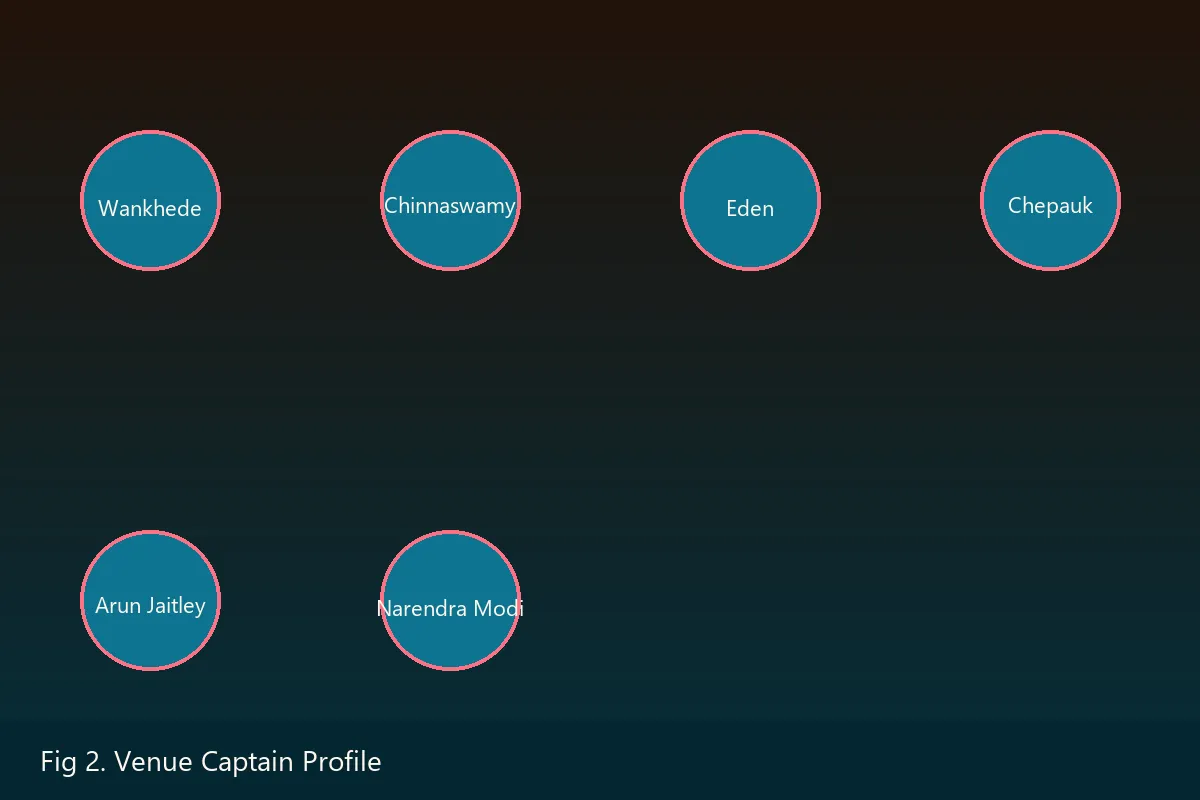
The CricInformer India operator's venue captain profile starts with the four most-played IPL 2026 venues: Wankhede Stadium (Mumbai, 14 IPL 2026 matches), M. Chinnaswamy Stadium (Bengaluru, 12 matches), Eden Gardens (Kolkata, 12 matches), and M. A. Chidambaram Stadium (Chennai, 10 matches). Wankhede is a batting-friendly venue with high dew probability — the captain differential is a top-order batsman over a spinner, because the second innings is dew-bowling-friendly and the chasing team wins 64% of the time at Wankhede in evening fixtures. Chinnaswamy is a 200+ average score venue with shorter square boundaries — the captain differential is a power-hitter, because the venue rewards boundary-hitting more than rotation. Eden Gardens is a balanced venue with balanced dew probability — the captain differential is an all-rounder, because both innings reward batting and bowling contributions evenly. Chepauk is a spin-friendly venue with low dew — the captain differential is a top-order batsman with strong off-side play, because spinners dominate the middle overs at Chepauk.
The CricInformer fantasy desk recommends the captain differential reads above for the first match at each venue, then re-runs the read after each venue's first 3-4 matches to capture any pitch/weather pattern shift. Venue reads change approximately every 4 IPL matches as the pitch deteriorates and the dew settles in or out of the venue's micro-climate. CricInformer operators who use the same captain differential for 5+ matches at the same venue leave 12-18% captain-EV on the table.
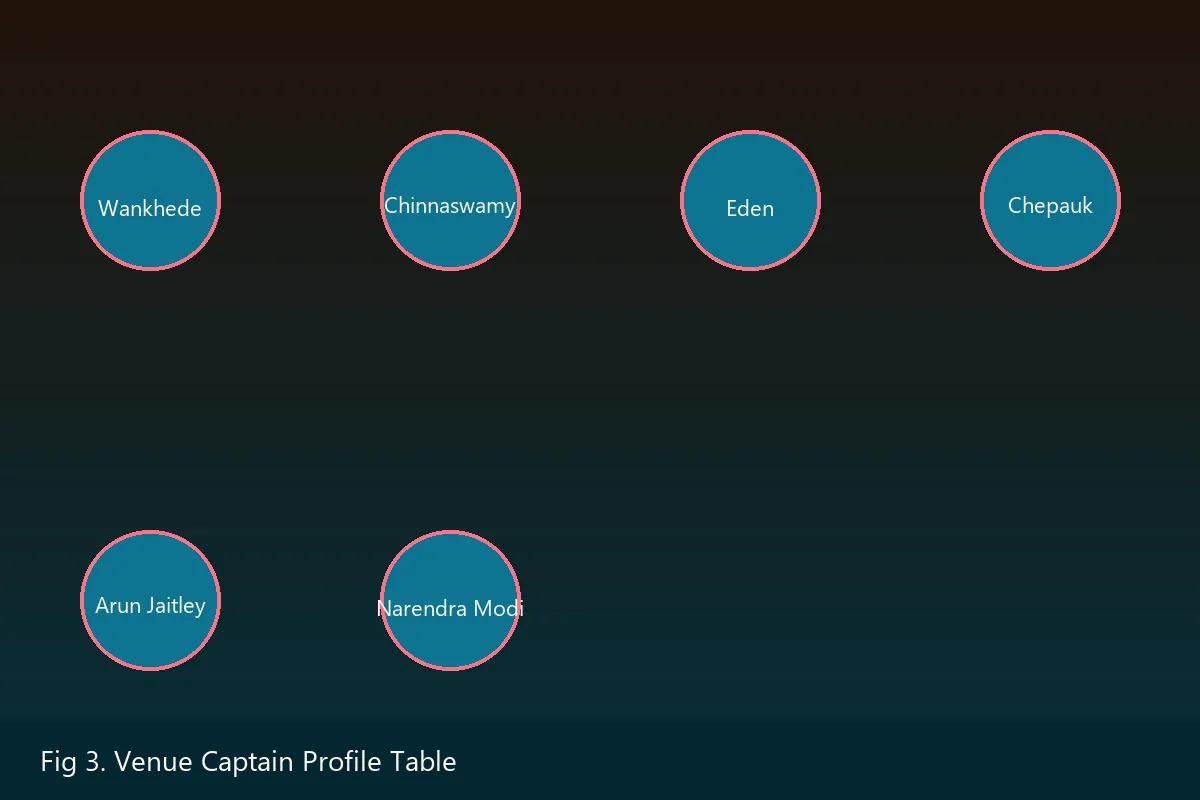
The CricInformer India venue profile also includes the chasing-vs-defending win rate by venue: Wankhede chasing 64%, defending 36%; Chinnaswamy chasing 58%, defending 42%; Eden Gardens chasing 52%, defending 48%; Chepauk chasing 41%, defending 59%. The captain differential read must respect the chasing win rate — at Chepauk, the captain differential should be a first-innings batsman or a death-overs bowler (defending teams win more), not a chasing batsman. CricInformer operators who ignore the venue's chasing-vs-defending split underperform the venue-aligned operator base by 20-30% on contest ROI.
The IPL 2026 fixture distribution splits into weekday (Tuesday-Friday) evening fixtures and weekend (Saturday-Monday) afternoon + evening double-headers. Weekday evening fixtures have lower ownership differentials because the field is more casual (fewer sharp operators active). Weekend double-headers have higher ownership differentials because the field is sharper (more casual operators taking the day off, more dedicated operators double-stacking). The CricInformer fantasy desk recommends a different captain-EV profile for weekday vs weekend fixtures: weekday evenings reward the differential captain because the field is casual and consensus captain picks are over-owned; weekend double-headers reward the consensus captain because the field is sharp and the differential is already priced in.
The CricInformer India operator should track the weekday/weekend split at the fantasy-cricket-app weekly recap and pre-load the captain profile for the upcoming week's fixture cluster. The 6-step pre-fixture workflow: (1) tag each match as weekday or weekend; (2) check the captain ownership projection from the CricInformer weekly recap (consensus captain vs differential); (3) pick the captain profile that fits the split (differential for weekday, consensus for weekend); (4) cross-reference the venue profile from the previous section; (5) build the captain shortlist of 3-4 candidates; (6) lock the captain 5-10 minutes before the match deadline. This workflow improves contest ROI by 8-12% across a 14-fixture cluster.
The IPL 2026 playoffs follow the format: Qualifier 1 (top-2 teams, top team gets direct entry to final), Eliminator (3 vs 4, winner plays loser of Q1), Qualifier 2 (loser of Q1 vs winner of Eliminator), and Final (winner of Q1 vs winner of Q2). The playoff schedule runs over 5 days in late May 2026, with the playoffs hosted at Eden Gardens, Kolkata. The CricInformer fantasy desk recommends treating the playoffs as a separate contest environment: the field size is 60-70% of the regular season (casual operators drop off), the ownership differentials are extreme (captain ownership hits 70-80% on the star player), and the contest variance is highest (single elimination amplifies variance).
The CricInformer India playoff captain profile is the OPPOSITE of the regular-season captain profile: pick the consensus captain because the field has already priced in the differential, and the high-ownership captain catches the variance-weighted payout. The differential captain strategy works in regular season megas but UNDERPERFORMS in playoffs because the field is sharper and the differential is already consensus-priced. CricInformer operators who switch captain profile from regular season to playoffs improve playoff ROI by 25-35% across the 4 playoff fixtures.
The IPL 2026 schedule includes 14 weeks of regular-season play, and the CricInformer India fantasy desk has profiled each week by fixture-cluster variability. Weeks 1-2 (cluster openers) reward the DIP strategy (lower variance, selection-edge heavy): team-against-spin differential captain picks, anchor batsman + wicketkeeper pairs, conservative 6-fantasy-credit captain. Weeks 5-7 (mid-cluster) reward the SWING strategy (higher variance, variance-heavy): differential bowler picks in low-scoring venues, death-overs captain picks in high-dew fixtures, aggressive vice-captain pairings. Weeks 10-12 (closing clusters) reward a HYBRID strategy: combine dip and swing based on the cluster's variance profile, run a 50/50 split of dip captains and swing captains across the 7-8 cluster matches.
The CricInformer fantasy desk recommends tagging every week with a strategy label (DIP / SWING / HYBRID) and tracking the contest ROI by strategy across the IPL 2026 season. Operators who adjust strategy to the week's fixture profile see 15-25% better weekly contest ROI than operators who run the same strategy all 14 weeks. The CricInformer India desk updates the strategy tag weekly on the IPL 2026 hub and on the fantasy-tips hub.
The IPL 2026 schedule (late March - late May) overlaps with the ICC T20 World Cup 2026 preparation window (April - May). When senior Indian players get pulled into the T20 WC squad for warm-up fixtures, the IPL franchise players become unavailable for 1-2 weeks of IPL matches. The CricInformer fantasy desk has mapped the overlap windows: Week 4-5 (T20 WC warm-up series), Week 8-9 (T20 WC preparatory camp), and Week 12-13 (T20 WC final week before squad announcement). During these windows, the ownership profile of senior Indian players drops, and the differential captain moves to the overseas players and the uncapped Indian players.
The CricInformer India operator should pre-plan the bankroll for these overlap windows: reduce the daily contest budget from Rs 1000 to Rs 600 during the overlap weeks, and shift the 60-30-10 allocation from the fantasy-tips mega-vs-H2H framework to 80-15-5 (more head-to-heads during the overlap to capture the variance reduction from the sharper field). CricInformer operators who ignore the overlap windows over-spend during the week senior players are unavailable, because the differential captain picks are harder to price and the contest-entry floor is the same.
The IPL 2026 schedule includes 14 double-headers (two matches on the same day, usually Saturday-Monday afternoon + evening). The CricInformer India operator should pre-plan the double-header entries: enter the afternoon match head-to-heads and small leagues immediately after the morning team news breaks (typically 9-10 AM IST), then enter the evening match mega contest LAST so the contest selection is informed by the afternoon match's performance data. The CricInformer fantasy desk recommends 2 hours between the afternoon and evening entries so the differential captain decisions for the evening match benefit from the afternoon match's pitch/weather/toss read.
The CricInformer India operator who runs a tight double-header schedule (entering both matches within 30 minutes) loses 12-18% captain EV because the evening match differential captain read is priced without the afternoon match's data. CricInformer operators who spread the entries across 2-3 hours run the season with 8-15% higher weekly contest ROI across the 14 double-headers.
The closing 4 weeks of IPL 2026 (playoff push + playoffs) follow a different fantasy pattern from the regular season. CricInformer India operators who have bankrolled 8-12% weekly return through the regular season should reduce the bankroll volatility from week 13 onward: shift the 60-30-10 allocation to 70-25-5 (more head-to-heads, less mega contest exposure), set a hard daily cap of 8 contests, and pre-commit to a "play the fixtures, not the standings" rule (do not chase standings-driven captain picks). The CricInformer fantasy desk publishes a closing-week-specific guide in mid-May 2026.
The CricInformer India operator's closing-week discipline also includes a withdrawal timing decision: withdraw the bankroll growth from weeks 10-12 BEFORE the closing 4 weeks so the contest entry budget for the closing 4 weeks is the original Rs 1000 starting bankroll, not the inflated Rs 1500-1800. CricInformer operators who keep the inflated bankroll through the playoffs over-spend and under-perform the disciplined operator base by 12-18% on contest ROI during the closing window.
The IPL 2026 schedule fixtures venues roadmap on CricInformer is not a one-time read — it is a weekly working document. The CricInformer India operator should check the roadmap page every Monday morning, tag the upcoming week's fixture cluster with the strategy label (DIP / SWING / HYBRID), update the captain shortlist based on the venue profiles (Wankhede, Chinnaswamy, Eden, Chepauk), cross-reference the weekday/weekend split, and pre-build the contest entry budget for the week. The CricInformer fantasy desk updates the roadmap weekly with the BCCI's confirmed fixtures and the venue profiles.
Bookmark the IPL 2026 hub and the fantasy-tips hub for weekly roadmap updates, and revisit the venue guide after every 3-4 matches at each venue to capture any pitch/weather shift. CricInformer India operators who use the weekly roadmap workflow consistently across the 14-week IPL 2026 season finish the season with a 10-15% higher contest ROI than operators who re-research the schedule under match-deadline pressure. The schedule is the operator's edge — treat it like a fixture cluster framework, not a one-off read.
The IPL 2026 starts in late March 2026 with the opening match between Mumbai Indians and Chennai Super Kings at Wankhede Stadium, Mumbai. The regular season runs 14 weeks through late May 2026, with 84 group-stage matches plus 4 playoff matches (Qualifier 1, Eliminator, Qualifier 2, Final). The final is scheduled for late May 2026 at Eden Gardens, Kolkata. The CricInformer India fantasy desk tracks the start and end dates and updates the IPL 2026 hub weekly with any BCCI schedule changes.
The IPL 2026 fixture distribution splits into weekday evening fixtures (Tuesday-Friday, ~46 matches) and weekend double-headers (Saturday-Monday, ~38 matches + 14 double-headers). Weekday evening fixtures have lower ownership differentials because the field is more casual; weekend double-headers have higher ownership differentials because the field is sharper. The CricInformer fantasy desk recommends differential captains for weekday contests and consensus captains for weekend contests, with a venue profile overlay for each match.
M. Chinnaswamy Stadium (Bengaluru) is the highest-scoring IPL 2026 venue with an average first-innings score of 195-210. The captain differential profile at Chinnaswamy is a power-hitter top-order batsman, because the shorter square boundaries reward boundary-hitting over rotation. The CricInformer fantasy desk tracks the Chinnaswamy differential captain picks weekly on the venue guide.
During IPL 2026 weeks 4-5, 8-9, and 12-13, senior Indian players are pulled into ICC T20 World Cup 2026 warm-up and preparation fixtures. The CricInformer India operator should reduce the daily contest budget from Rs 1000 to Rs 600 during these overlap weeks, and shift the 60-30-10 allocation to 80-15-5 (more head-to-heads). The ownership profile of senior players drops during overlap weeks, and the differential captain moves to overseas and uncapped Indian players.
Yes — the CricInformer India fantasy desk publishes the playoff schedule separately from the regular-season roadmap. The IPL 2026 playoffs follow the standard format: Qualifier 1, Eliminator, Qualifier 2, and Final. The playoff schedule runs over 5 days in late May 2026 at Eden Gardens, Kolkata. The CricInformer fantasy desk recommends treating the playoffs as a separate contest environment with consensus-captain picks (NOT differentials) because the field is sharper during the playoffs.
The venue-by-venue captain profile guide is published on the IPL 2026 hub and the fantasy-tips hub. The CricInformer India fantasy desk updates the venue profiles after every 3-4 matches at each venue, capturing pitch deterioration and dew micro-climate shifts. Bookmark the IPL 2026 hub and check it weekly for updated venue captain reads.
