
Zimbabwe name Sikandar Raza-led T20I squad for India series in Harare
Zimbabwe Cricket released its 15-man T20I party on Wednesday, 22 July 2026. Sikandar Raza will captain the side, Richard Ngarava stays in the attack, and Harare Sports Club will stage every match of the three-game home series against India.
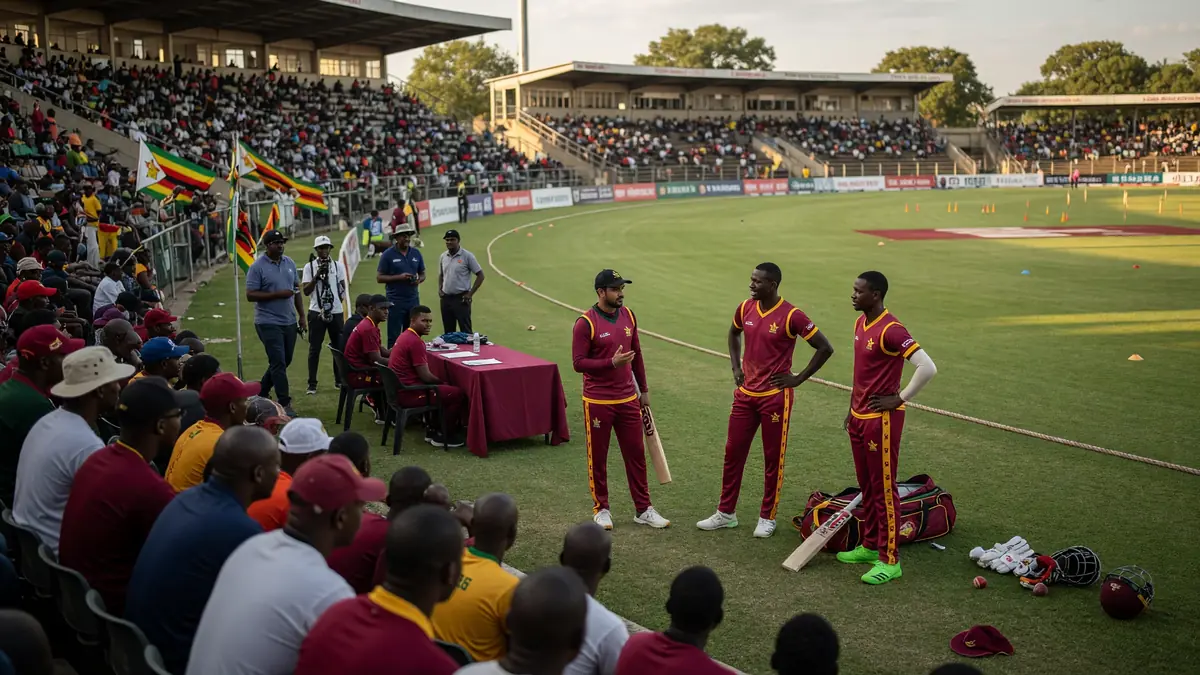
For Indian readers tracking the short tour, the announcement supplies the first locked facts of the week: captain, full travelling party for the hosts, and a compressed schedule that leaves little room to recover from a poor start. Elevens and toss decisions will follow later. Until then, the named 15 is the cleanest public signal of how Zimbabwe wants to build a home T20 side against a full-member opponent.
Raza remains the organisational centre of the group. His dual role as batter and off-spin option also shapes how the middle overs can be managed if the surface slows under lights. Ngarava’s retention keeps a left-arm seam threat available for the new ball and the death, which matters against right-hand heavy middle orders even when bounce is true rather than extreme.
Harare hosts a three-night T20 window
The fixtures fall on 23, 25 and 26 July, all at Harare Sports Club. A single-venue series shortens the learning curve for both teams. Local bowlers can reuse lengths that hold under lights after one night’s data, while visiting batters get only a brief sample of pace off the surface before the rubber is decided.
Three games also tighten captaincy choices. Early experimentation carries a higher cost because there is no long back half of a tour in which to repair form. The first team sheet on 23 July will therefore be read less as a pure trial and more as a baseline reading of bounce, grip and dew timing.
Weather and official start times should be confirmed closer to match day through board and broadcast channels. What is already verified is the venue lock and the three-date cluster that defines the whole bilateral window.
The confirmed 15-man party
Zimbabwe’s announced squad is:
- Sikandar Raza (captain)
- Brian Bennett
- Ryan Burl
- Tanaka Chivanga
- Ben Curran
- Brad Evans
- Wessly Madhevere
- Tadiwanashe Marumani
- Wellington Masakadza
- Blessing Muzarabani
- Dion Myers
- Richard Ngarava
- Newman Nyamhuri
- Milton Shumba
- Tafadzwa Tsiga
The list blends multi-format experience with recent domestic pathways. Pace depth is visible on paper through Ngarava, Muzarabani, Chivanga, Evans and Nyamhuri. That spread lets the captain mix left- and right-arm angles without immediately turning to part-time overs if the powerplay goes wrong.
Spin and middle-order balance sit with Raza, Burl, Madhevere and left-arm option Masakadza. Batting routes through Marumani, Bennett, Curran, Myers and Shumba give selectors room to shuffle once India’s bowling match-ups are clearer after the first night. Tsiga’s presence as a wicketkeeper-batter adds a specialist gloves reading if the side wants batting stability lower down rather than a pure all-rounder balance.
Selection brief: arrivals and exits
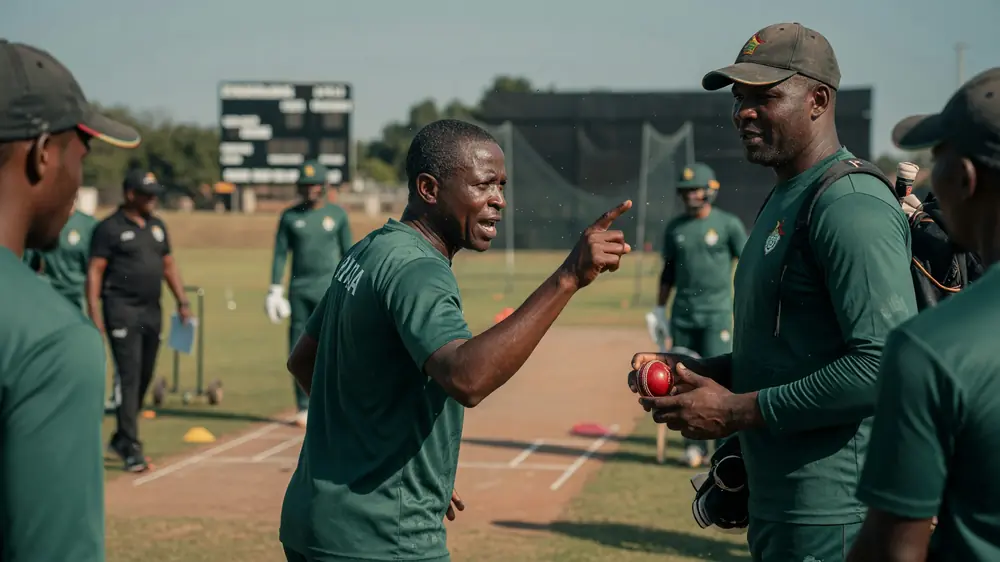
Relative to the T20I group that faced Bangladesh in Bulawayo, Zimbabwe Cricket adjusted three places. The incoming names are Wessly Madhevere, Tafadzwa Tsiga and Newman Nyamhuri. Madhevere comes back as an all-round presence for the middle overs. Tsiga earns a first T20I opportunity as a wicketkeeper-batter. Nyamhuri is available again after missing the Bangladesh white-ball set because of a minor fitness issue that has since cleared.
The places they take previously belonged to Clive Madande, Tinotenda Maposa and Tashinga Musekiwa. Read together, the swap points to a preference for a specialist keeping option plus refreshed bowling depth, rather than carrying the exact Bulawayo balance into a home series against India.
None of those three arrivals guarantees a place in the first XI. What they do change is the bench math. Madhevere can be used as a batter who can bowl when conditions slow. Tsiga gives Raza a different finishing or lower-order profile if required rate climbs with wickets in hand. Nyamhuri restores another left-arm seam look that can share new-ball or middle-over duty depending on how the surface behaves after dusk.
Reading the pace unit under lights
Ngarava’s inclusion is continuity with a clear tactical purpose. A left-arm seamer who can hit a hard length and still operate late forces visiting batters to reset scoring arcs, especially when the ball is reversing or when the outfield is fast enough that mistimed pulls still race. India have rotated several new-ball and death combinations in recent bilaterals; a consistent left-arm threat remains a match-up problem even on a true pitch.
Muzarabani’s bounce offers a complementary height angle, while Chivanga, Evans and Nyamhuri supply rotation so no single quick is forced through an unbroken spell when dew arrives. In a three-match set, workload management is as important as the first over of the night. Captains who burn their best overs too early often discover that the final five become a scramble.
For fantasy and match-prep readers, the practical checkpoints are simple. Who shares the new ball with Ngarava or Muzarabani on 23 July? Does Nyamhuri appear in the XI at all, or is he held as cover? Are any of the quicks held strictly for the death? Those answers will travel into the second and third games faster than any pre-series reputation gap.
Where India stand coming into Harare
India’s most recent T20I bilaterals have been difficult. They dropped a series 2-0 in Ireland and were beaten 4-0 by England. Shreyas Iyer is still looking for a first T20I series win as captain. Those scorelines sit against a broader context in which India also hold the ICC Men’s T20 World Cup title, so the visiting side arrives with depth on paper and unfinished business in short bilateral windows.
That mix matters for how the Harare series should be read. World Cup pedigree does not automatically settle a three-night assignment on an away surface. At the same time, a host that has already competed across formats at home cannot treat India’s recent results as a guarantee of a clean sweep. Role clarity on the night will outweigh historical rankings once the first ball is bowled.
Indian audiences following the tour should prioritise confirmed elevens, toss information and early lengths over reputation alone. A short rubber rewards current form and match-up discipline more than brand strength.
Zimbabwe’s path into the India series
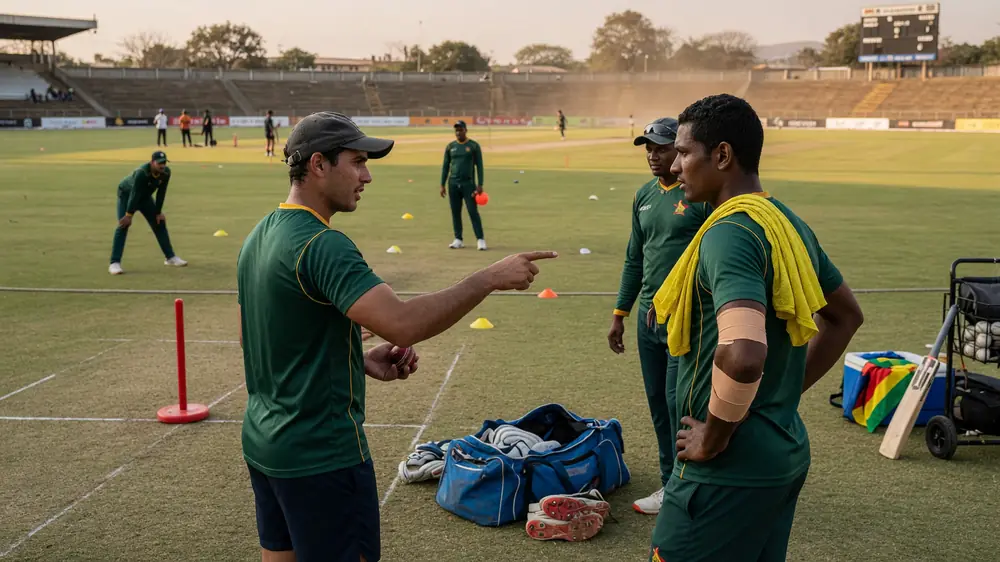
The hosts’ recent competitive arc has been mixed rather than one-directional. Against Bangladesh they took an innings victory in a one-off Test and won the ODI series 2-1, then dropped the T20Is 2-1. The white-ball reverse is a caution about finishing and death bowling, not evidence that the group cannot stay in a series against full-member opposition.
At the 2026 T20 World Cup, Zimbabwe beat Australia in the group stage and reached the Super Eights. Losses to India, South Africa and West Indies followed in that next round. The Australia result still shows that this side can raise its ceiling on a given night when batting intent and new-ball discipline align.
Home conditions add another layer. Dew timing, outfield speed and square-boundary dimensions often decide whether a total around the mid-150s is defendable. Raza’s captaincy will be judged less on pre-match messaging and more on whether he protects his best overs for the passages when India’s middle order tries to accelerate.
Balance on paper and the first-game questions
India should still begin as favourites because of squad depth and broad T20 experience. Zimbabwe’s route to a competitive rubber is narrower but readable: win enough new-ball phases, keep Raza and Burl involved through the middle, and force unfamiliar angles when left-arm pace operates from both ends.
Tsiga’s call-up also creates a quiet subplot around finishing and keeping standards. A first selection rarely rewrites a series by itself, yet it can free a captain to promote or hold a batter if the required rate spikes. That option only matters if the first ten overs leave enough wickets in hand.
Watch the opening lengths with Ngarava and Muzarabani. Note whether Madhevere bowls meaningful overs or is used mainly with the bat. Track whether Nyamhuri shares the new ball or sits out the first XI. Those role signals will set the template for 25 and 26 July more reliably than any headline narrative written before the toss.
Next checkpoint: 23 July at Harare Sports Club
The first fixture will answer the immediate selection questions. If Zimbabwe open with two specialist quicks and hold a third for the death, India will need clear plans against hard lengths. If the hosts load extra spin because the afternoon surface looks dry, left-right combinations in the middle order become more important for both teams.
Until elevens are posted, the verified public record remains the squad composition, Raza’s captaincy, the three-place adjustment from the Bangladesh T20 group, Ngarava’s availability, and the fixed Harare dates. Follow further tour notes in our cricket news coverage as warm-up updates and match reports arrive through the window. The next hard checkpoint is the first toss and confirmed playing XI on 23 July.
Follow the India–Zimbabwe window on CricInformer
Skill-based fantasy contests for users 18+ in permitted states, with live scoring tied to real match events.